
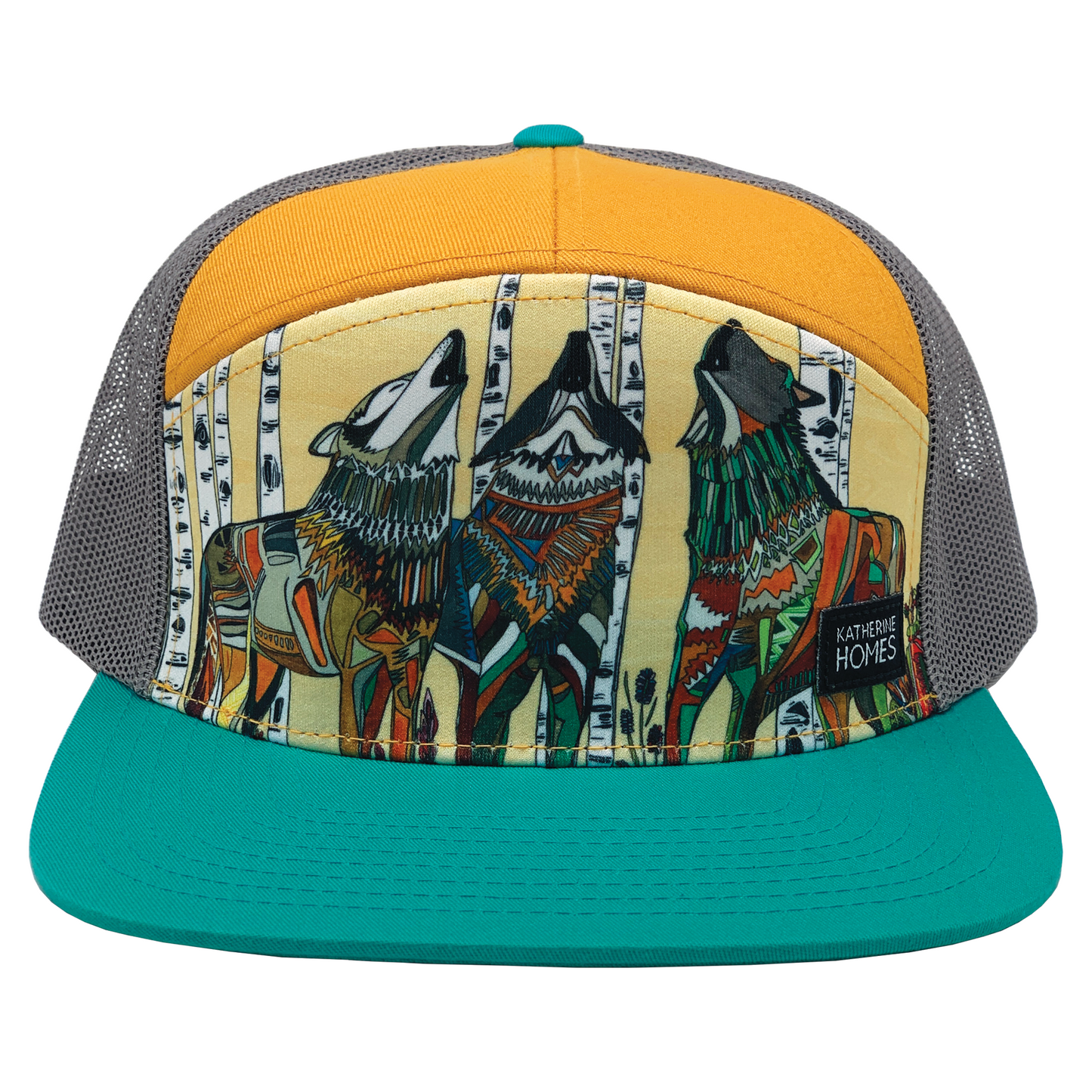







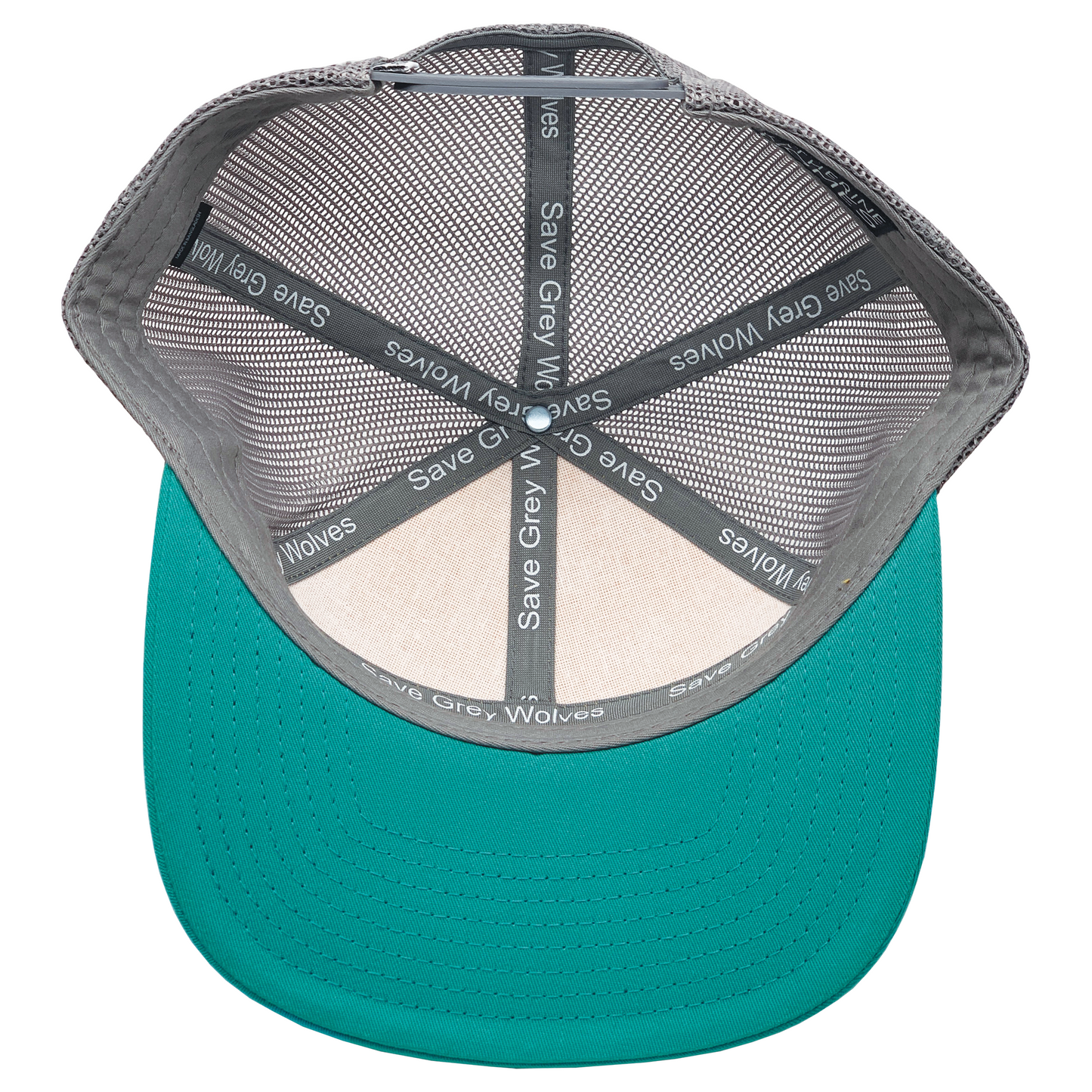




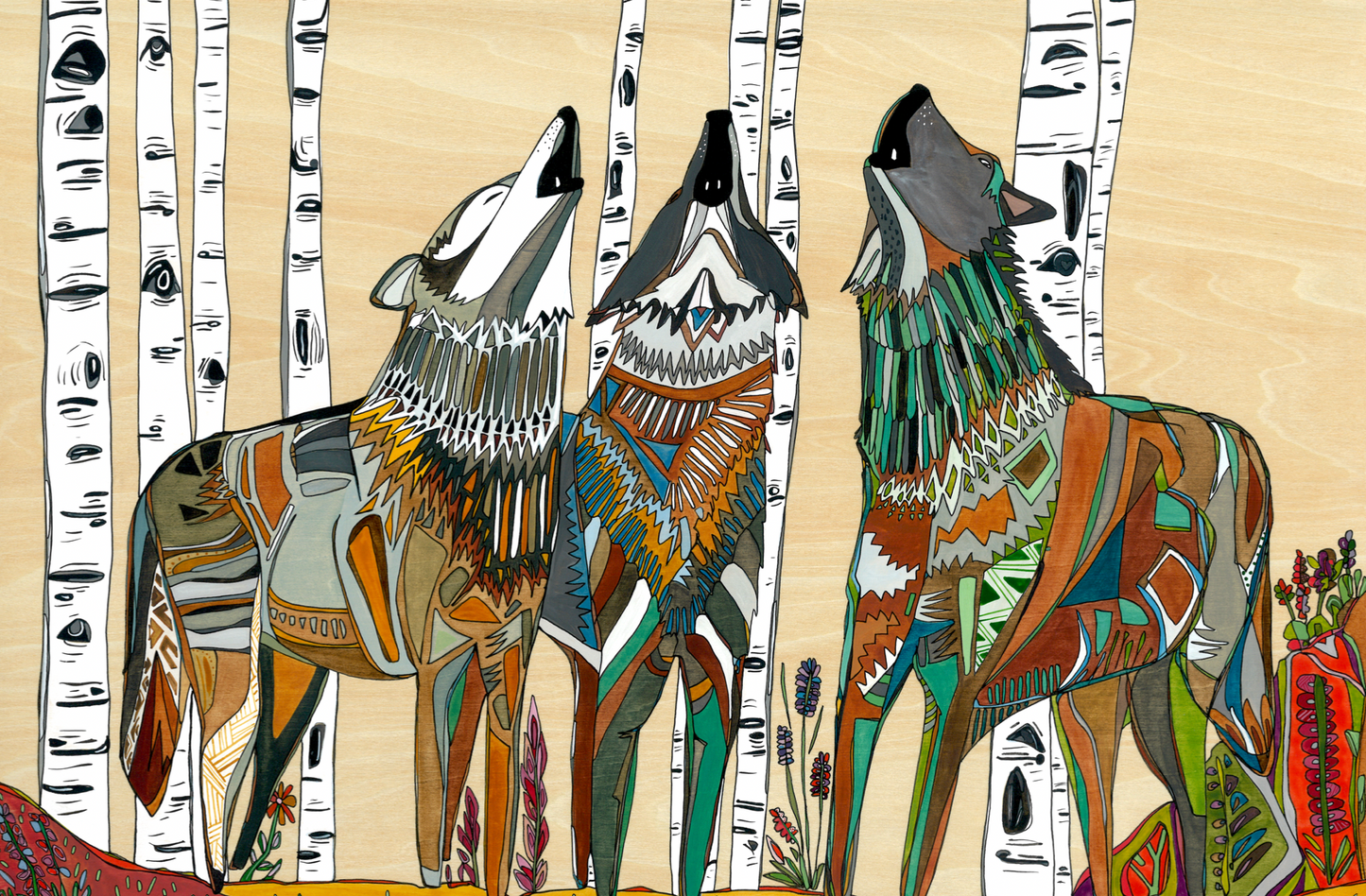
Grey Wolves Howling | 7 Panel | Turquoise | Butterscotch | 100% Grey Recycled Mesh
View all detailsSold Out
This store requires javascript to be enabled for some features to work correctly.


Despite decades of hard-won recovery, gray wolves remain absent from most of their historic range and face renewed political and legal threats to the very protections that made their comeback possible — meaning their long-term survival still depends on continued advocacy, not just past progress.


Gray wolves nearly went extinct in the lower 48 states, which led to federal Endangered Species Act protections starting in 1974. Since then, their numbers have rebounded in the Great Lakes, Northern Rockies, Colorado, California, and the Pacific Northwest, and today the population includes an estimated 70 wolves in California, 3,700 in the Great Lakes region, 2,900 in the Northern Rockies, and 425 in the Pacific Northwest, along with an ongoing reintroduction effort in Colorado aiming for 20-40 more wolves by 2028. Despite this progress, wolves remain absent from much of their historic range and continue to play a key ecological role — regulating deer and elk populations and redistributing nutrients through their prey's carcasses, which in turn benefits species like grizzly bears and other scavengers.


Legal protections for gray wolves remain contested and unstable. Congress stripped protections in the Northern Rockies in 2011, and the Trump administration removed them nationwide in 2020; though a judge overturned that 2020 decision in 2022, the U.S. Fish and Wildlife Service has continued defending the delisting in court through its 2024 appeal brief. States in the Northern Rockies illustrate the ongoing tension: Idaho and Montana have management plans aiming to cut their wolf populations to around 500 and by as much as 60%, respectively, even as Defenders and other advocates push for restored federal safeguards and continue working with ranchers on nonlethal coexistence tools like turbo-fladry, livestock guard dogs, and range riders.


